


 Let's start with a quick, judgment-free question:
How many passwords do you have?
Now, how many of those passwords are actually different?
If you just broke into a cold sweat, you're not alone.
Most people know they should use strong, unique passwords. Most people also know they should exercise more, eat fewer donuts, and stop checking emails at 10:30 PM. Yet here we are.
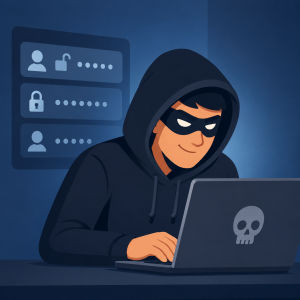
The reality is that cybercriminals aren't sitting in dark rooms trying to guess your dog's name anymore. They're using automated tools that can test millions of stolen passwords in minutes. If you've reused the same password across multiple accounts, one breach can turn into several very quickly.
The Good News: Hackers Usually Aren't After You
The bad news?
They're after everyone.
Most cyberattacks aren't personal. Nobody is specifically targeting Karen from accounting because she forgot to update her Netflix password. Criminals are casting enormous nets and seeing what they catch.
Think of it like leaving your car unlocked in a parking lot.
Sure, someone could spend hours trying to break into a locked vehicle. Or they could just walk down the row until they find one with the keys sitting in the cupholder.
Unfortunately, many businesses are still leaving the digital equivalent of the keys in the cupholder.
"But We're Too Small to Be a Target"
This is probably the most common cybersecurity myth we hear.
Small and midsize businesses often assume hackers are only interested in giant corporations with household names.
Actually, smaller organizations can be more attractive because they often have fewer security controls in place.
It's a little like home security. A burglar is more likely to try the house with no alarm system than the one with cameras, motion detectors, and a dog named Diesel.
Cybercriminals think the same way.
Three Things You Can Do Today
You don't need a million-dollar cybersecurity budget to dramatically improve your security.
Start here:
1. Use a Password Manager
No, your sticky note under the keyboard doesn't count.
A password manager creates and stores unique passwords so you don't have to remember them all.
2. Turn On Multi-Factor Authentication
That extra code you get on your phone?
It's annoying.
It's also one of the most effective security measures available today.
3. Update Your Software
We know.
Nobody likes software updates.
But those updates often contain security fixes that close vulnerabilities before criminals can exploit them.
Security Doesn't Have to Be Complicated
At SmartPath Technologies, we believe cybersecurity should make life easier, not harder.
The goal isn't to turn every employee into a cybersecurity expert. It's to build simple, practical safeguards that protect your business while allowing people to focus on their actual jobs.
Because let's be honest, your team was hired to serve customers, build products, and grow the business.
Not to spend their afternoons wondering whether that email from "Microsoft Support" is real.
And if your password is still "Password123," we won't judge.
We'll just strongly suggest changing it immediately after you finish reading this article.